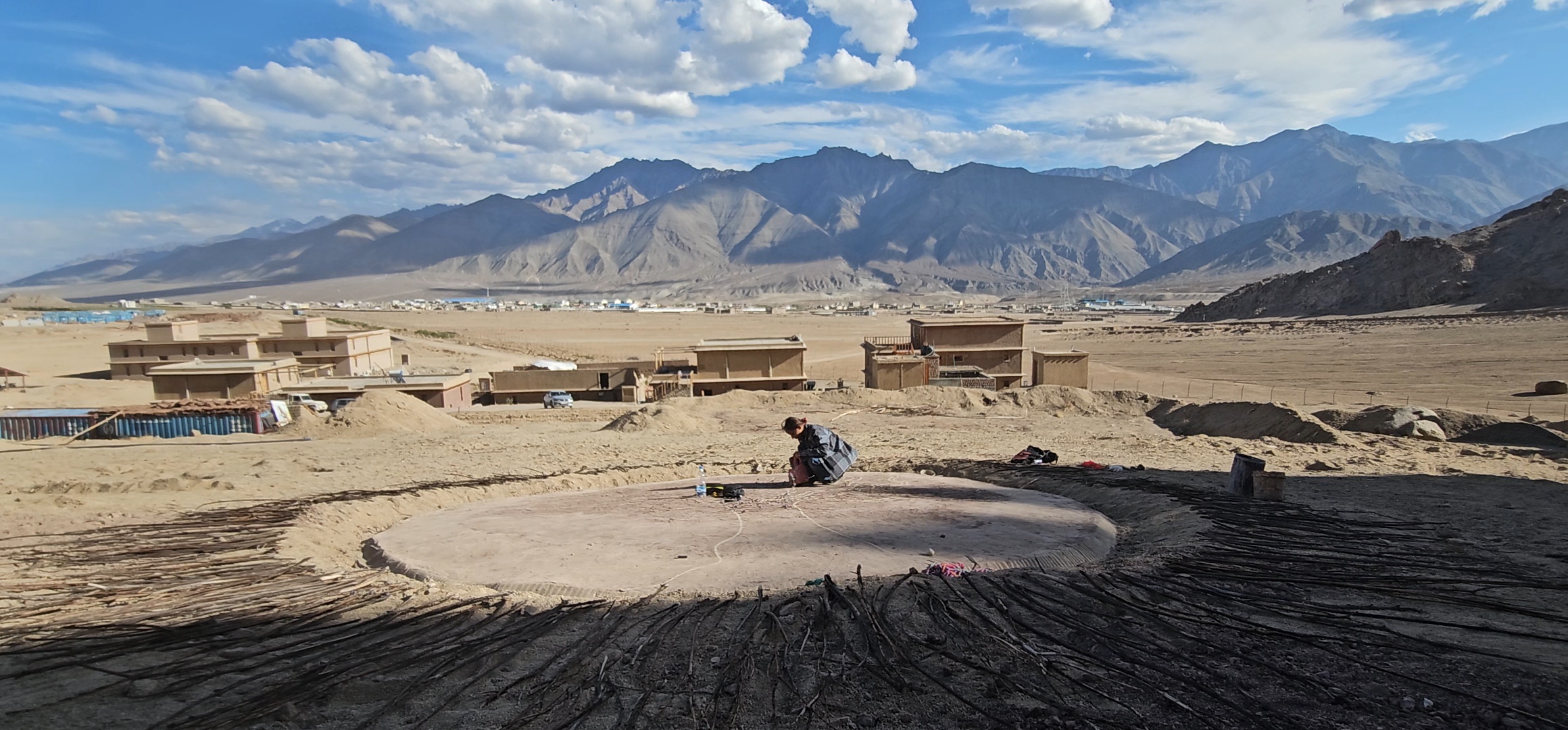
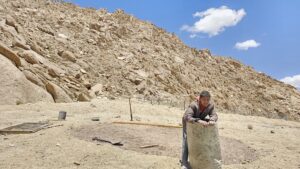
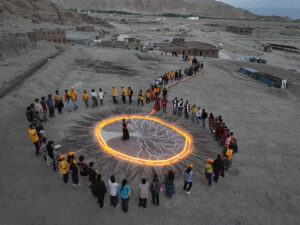
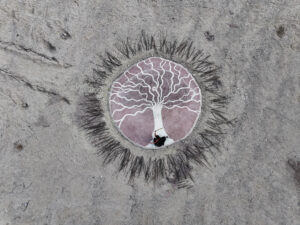
Sun and Earth, is a site-responsive land art installation created in Fiang, Ladakh, integrating land art, solar technology, and community engagement. The work draws on ecopoiesis, the creation of life-like environments, and phenomenology to explore relational ways of making art within landscapes impacted by climate change.
Conceptually anchored in the politics of scale, the work employs Basgo clay and Markalak butter mud, materials indigenous to Ladakh’s ancient architecture and ritual practice. Their application situates the piece within local ecological and cultural frameworks, while their inherent fragility foregrounds environmental precarity. The circular form reflects traditional spatial design and symbolises the cyclical rhythm of time and nature in South Asian and Tibetan cosmology.
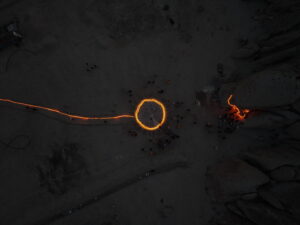
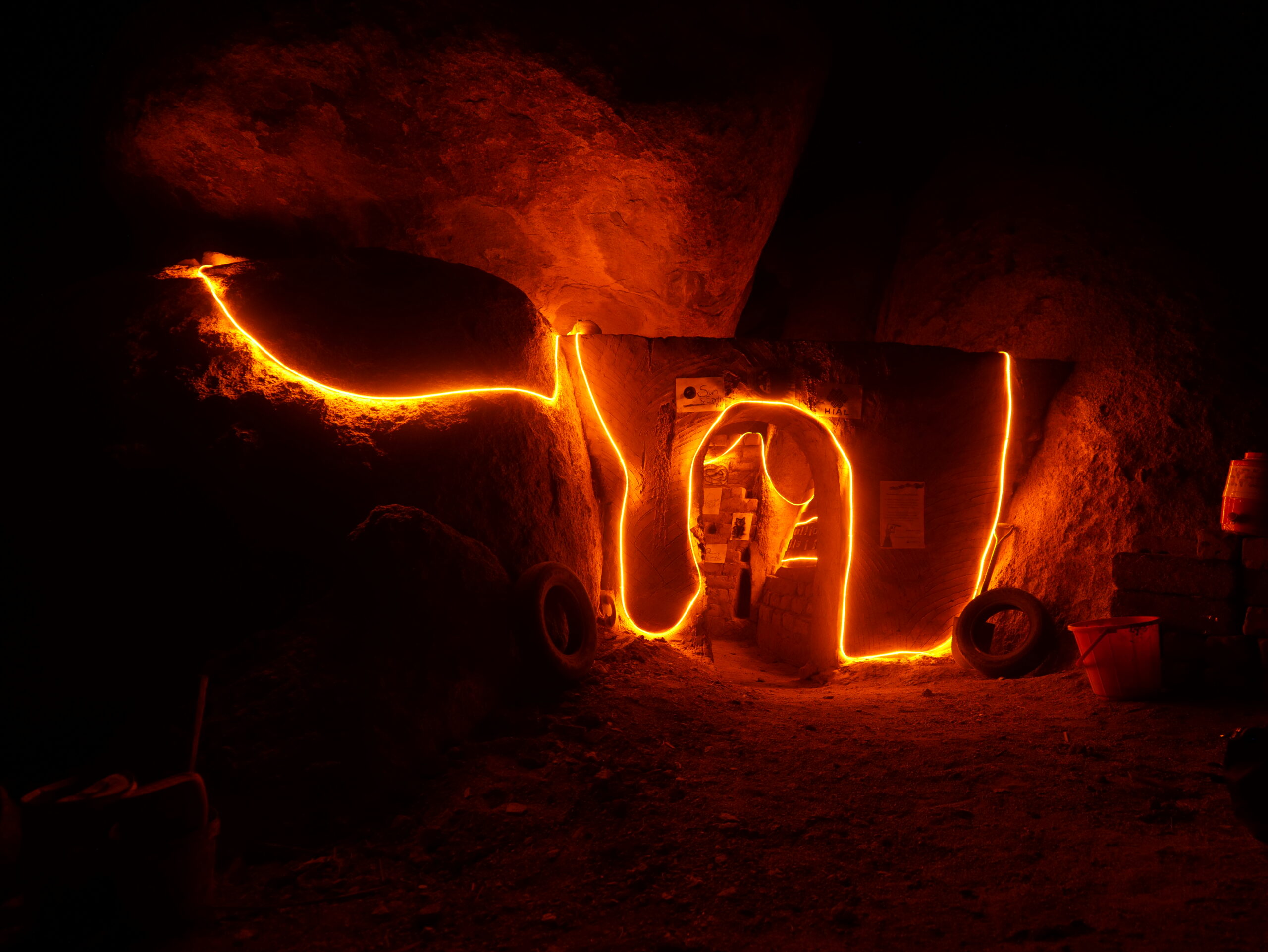
Solar-powered light sources embedded within the sculpture’s form activate it at dusk, transforming it from an inert object into a glowing field of meaning. These cycles of light and darkness mirror both the diurnal rhythms of Ladakh and the tension between disappearance and endurance, particularly relevant in a region facing melting glaciers, desertification, and cultural erosion.
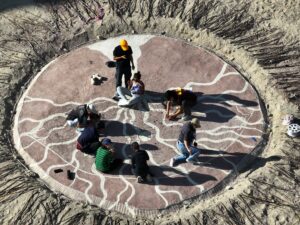
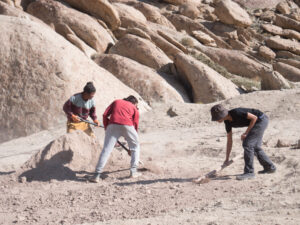
Community engagement is central to the work’s methodology. Local youth and community members participated in crafting and interpreting the installation, thereby embedding collective agency within the artwork’s material form. This participatory ethos aligns with Donna Haraway’s concept of “becoming with,” situating the artwork not only as environmental commentary but also as a collaborative act of worldmaking.
As a temporal installation subject to natural decay, Sun and Earth stands as a meditation on fragility, resilience, and ecological memory, demanding a reconsideration of what art can do in spaces where global warming is not theoretical but felt.
Acknowledgements: With profound gratitude to Sonam Wangchuck and Geetanjali Dhar for their invitation to create within the fragile and resilient ecosystem of Ladakh and for embodying hope for India’s future. This work is a result of the collective spirit and support provided by the Himalayan Institute of Alternatives (HIAL)